

The Wall of Visual Noise
You're scrolling through your iPhone, trying to find that one specific photo of your partner from a trip three years ago. Instead: fourteen near-identical angles of a mediocre brunch, six blurry attempts to capture the dog mid-yawn, screenshots of recipes you'll never cook. And then the dreaded pop-up — "iPhone Storage Full."
Your first instinct is guilt. I just need to sit down one weekend and clean this up. But the weekend never comes, and the hoard continues to grow.
Here's the hard truth Apple won't put in a keynote: this digital hoarding isn't your fault. It is a direct, highly engineered consequence of modern smartphone design.

The Psychology of "Just in Case"
We don't just take photos anymore — we take out Digital Insurance Policies.
Every time you tap the shutter five times for a single group pose, you're acting on a profound behavioral driver: the fear of regret. You capture multiple redundant images just in case someone blinked, just in case the lighting was weird, just in case you want options later.
This same fear extends to deletion. Why is it agonizing to delete a slightly blurry photo from 2018? Loss Aversion. The psychological pain of losing a potential memory — no matter how poor the quality — vastly outweighs the pleasure of gaining storage space.
When you combine this with the Illusion of Zero Cost — iCloud syncing invisibly in the background, no immediate physical penalty for 100 photos a day — the trap is set. Every photo feels free, until you hit the storage limit and the bill arrives.
The Device as Accomplice
Your iPhone's default settings are engineered to hoard data. These features, marketed as conveniences, are primary accelerators of the storage crisis:
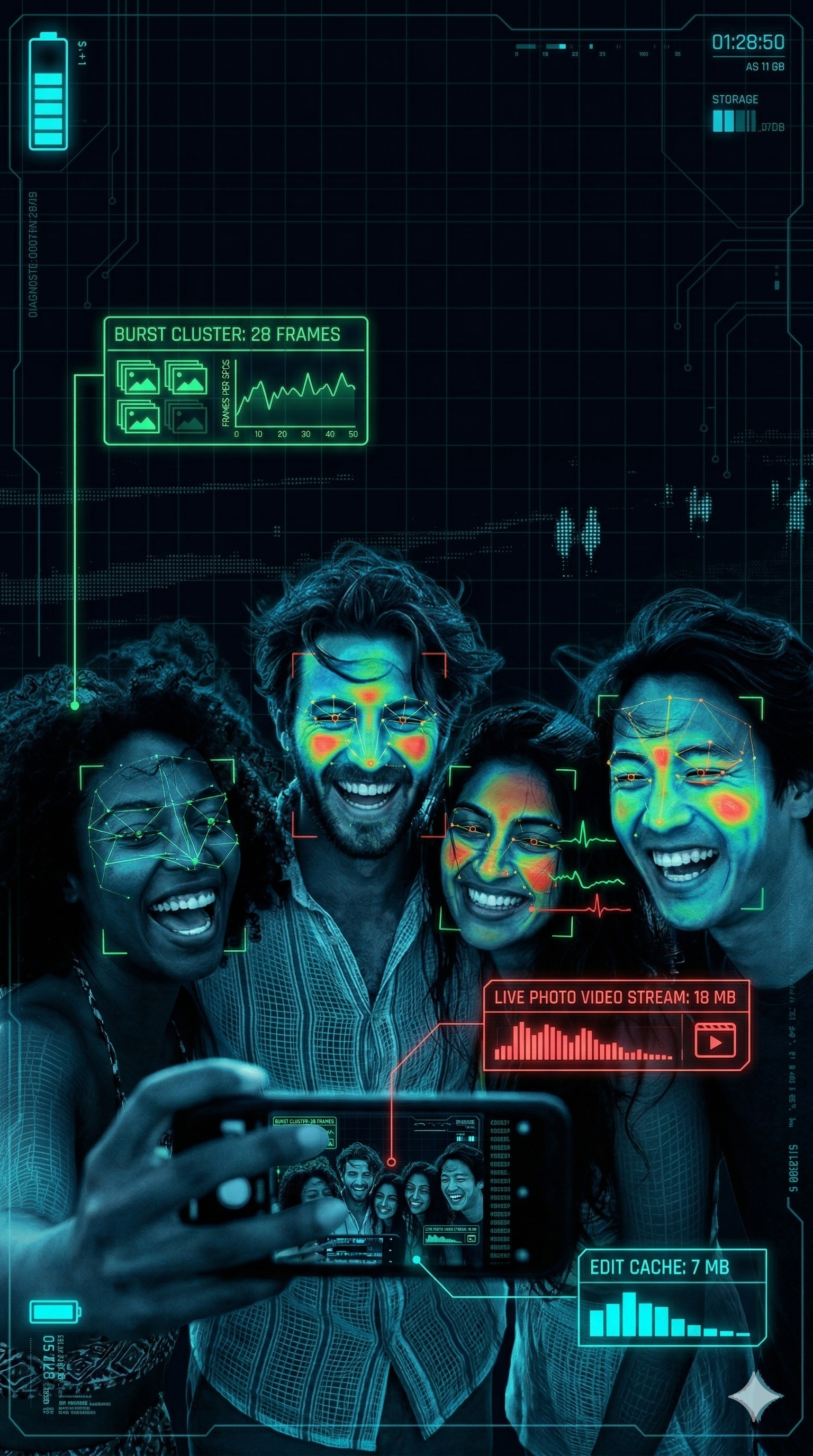
Live Photos (The Silent Storage Killers) Turned on by default, a Live Photo isn't just an image — it records a 3-second HD video alongside every keyframe. You think you took one photo. You actually captured a heavy video file. We call these Space Ghosts.
Computational Photography Pipelines Features like Apple's Photonic Engine don't take one picture when you tap the shutter. They silently capture a rapid sequence of multiple frames and stitch them together. This architecture normalizes the idea that one tap equals massive data generation.
Burst Bloat The ability to open the camera from your lock screen in a fraction of a second lowers the deliberation threshold to zero. Hold the shutter button accidentally and you trigger Burst Mode — instantly generating dozens of identical high-res files you'll likely never look at.
Automatic Cloud Synchronisation The ultimate enabler. By silently sweeping your files into the cloud, iOS delays the moment of reckoning — completely abstracting the storage constraint until it's too late.
The Dilution of Memory
We've been sold a lie: more photos equal better memories.
Psychological research — including Linda Henkel's studies on the photo-taking impairment effect — proves that obsessively documenting every moment actually outsources human memory to the device. By relying on our phones to "remember" for us, we encode less of the actual experience in our own brains.
When you capture everything mindlessly, the emotional weight of any single moment is diluted. The ultimate irony: by hoarding tens of thousands of photos to prevent forgetting, we create an archive so dense and unnavigable that we can never actually find or relive the memories we tried to save.
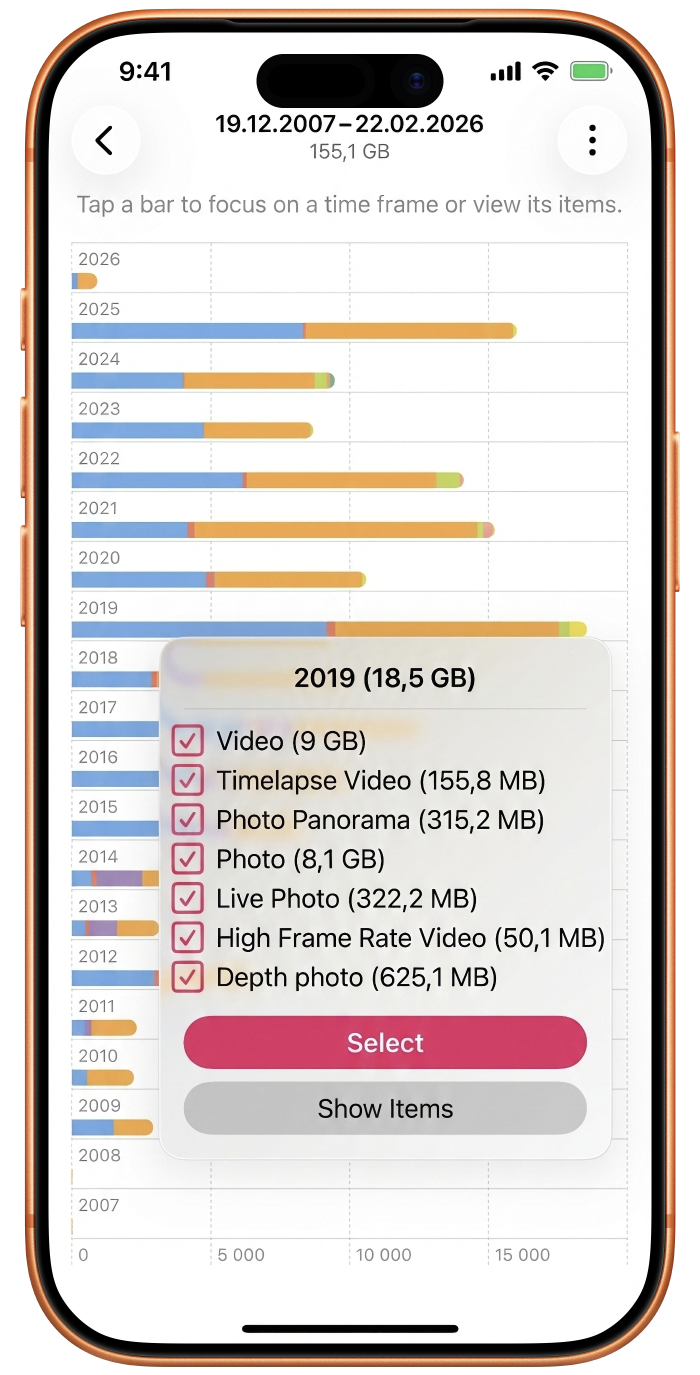
Regaining Agency: Stop Deleting, Start Auditing
Understanding that your device is rigged to make you hoard is the first step toward regaining control. But the fix isn't a scammy automated cleaner app — those tools just create more anxiety.
The mindset shift: from "I need to delete memories" to "I need to audit my data weight."
This is exactly why we built Photosweepy. Not a junk cleaner — a Digital X-Ray for your iPhone. It helps you identify the hidden structural bloat Apple's defaults created:
- Identify massive Live Photos and strip the heavy video data while keeping the pristine still
- Isolate Burst Mode sequences consuming gigabytes in the background
- Review your archive with analytical confidence rather than emotional panic
You don't have to be a victim of the algorithmic hoard. It's time to curate an intentional archive that actually brings you joy.
Download Photosweepy and run your first free gallery audit.