

The Fear Is Rational
The "Storage Full" notification is no longer just a technical inconvenience — it's a modern psychological trigger. It strikes at the worst moments: during a wedding toast, at a child's first steps, at a once-in-a-lifetime sunset.
The desperation that follows has birthed an entire industry of automated cleaner apps promising one-click salvation. Yet for most users, these apps feel inherently dangerous. That hesitation before hitting "Delete All" isn't technophobia. It's a rational response.
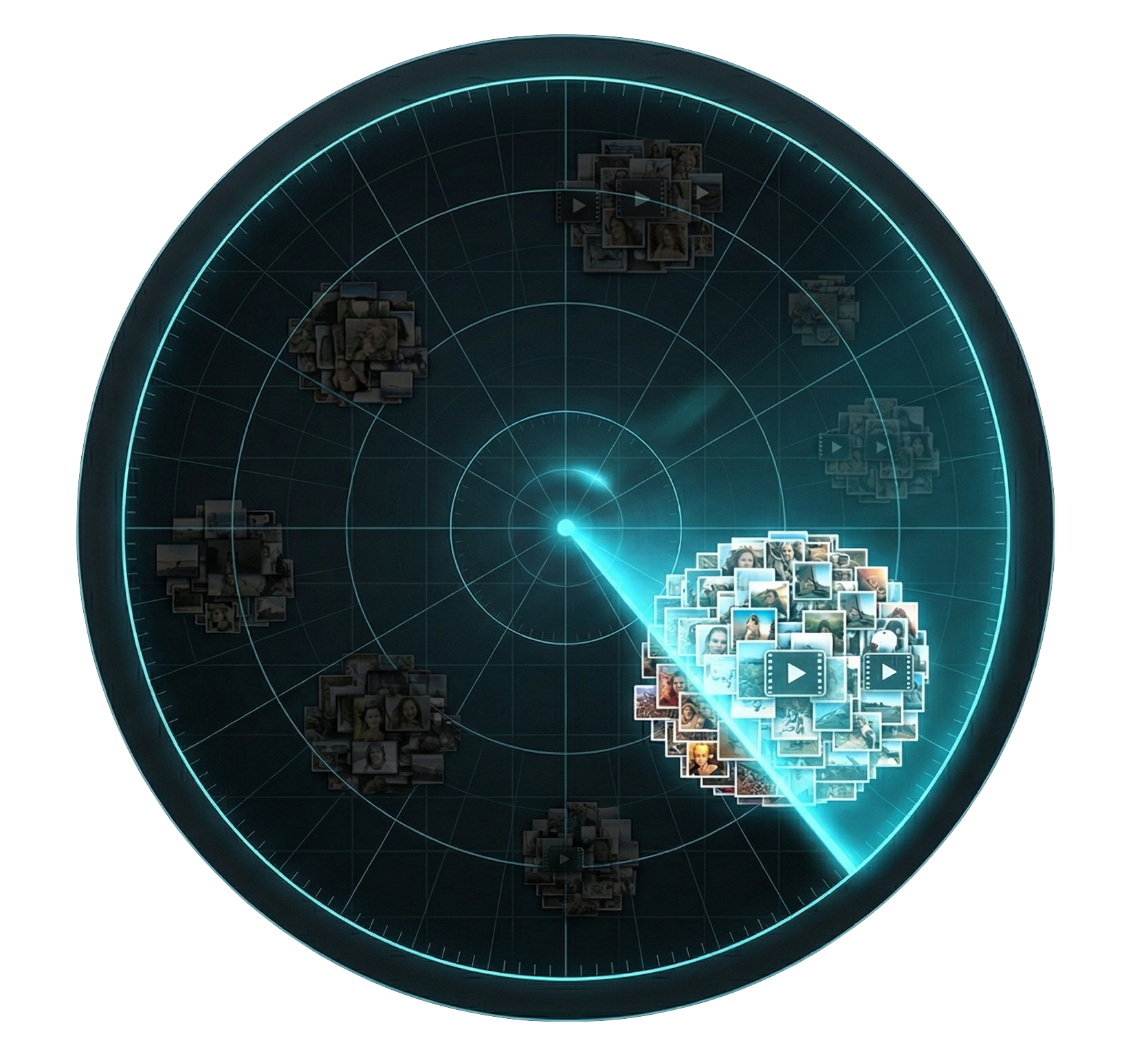
The Algorithm's Gaze vs. the Human Heart
Most automated cleaners operate on cold, pixel-perfect logic — scanning for duplicates based on metadata and color histograms. This creates a fundamental disconnect.
We don't hoard photos because we're lazy. We keep them as an unconscious insurance policy against forgetting who we were.
An algorithm cannot grasp a visual narrative. Imagine three "similar" photos of a toddler learning to walk. To an AI: redundant data points. To a parent: the wobbly start, the triumphant middle, the soft fall. By focusing solely on technical redundancy, aggressive automation risks deleting the chapters that make a story whole.
Letting a generic cleaner app scrub your library is like hiring a house cleaner who throws away your journals because they look like "extra paper."
The Iceberg Illusion: Why Manual Deletion Fails Too
If automated apps feel dangerous, the alternative — manual chronological scrolling — is a soul-crushing game of whack-a-mole. Twenty minutes of deleting screenshots frees up 40 MB.
This happens because of the Iceberg Illusion. What you see in your gallery are tiny thumbnails. What you don't see are the Space Ghosts:
- Live Photos — every still image hides a 3-second HD video file
- 4K defaults — a few seconds of modern video can outweigh a thousand photos
- Burst mode — a single pocket-dial creates 50 high-res images that look like one thumbnail
Trying to fix storage by deleting photos chronologically is like trying to lose weight by cutting your hair. Wrong metric entirely.

The Paradox of Control
We crave automation to solve the overwhelm, yet we fear giving up agency. The "danger" in most cleaner apps stems from their tendency to strip the user of the final word — they demand blind trust.
True digital decluttering shouldn't be about a machine making choices. It should be about a machine providing analytical clarity. We don't need a bulldozer. We need a Digital X-Ray — something that sees through the skin of thumbnails to find the heavy bones of the data.
Audit by Weight, Not by Feeling
The shift from "cleaning" to "curating" changes the entire emotional frequency of the task. Instead of scrolling through 20,000 photos asking "Do I love this?" 20,000 times — a recipe for decision fatigue — the goal should be to identify the structural waste in the library.
This is the philosophy behind Photosweepy. It doesn't ask for your trust — it provides you with evidence.
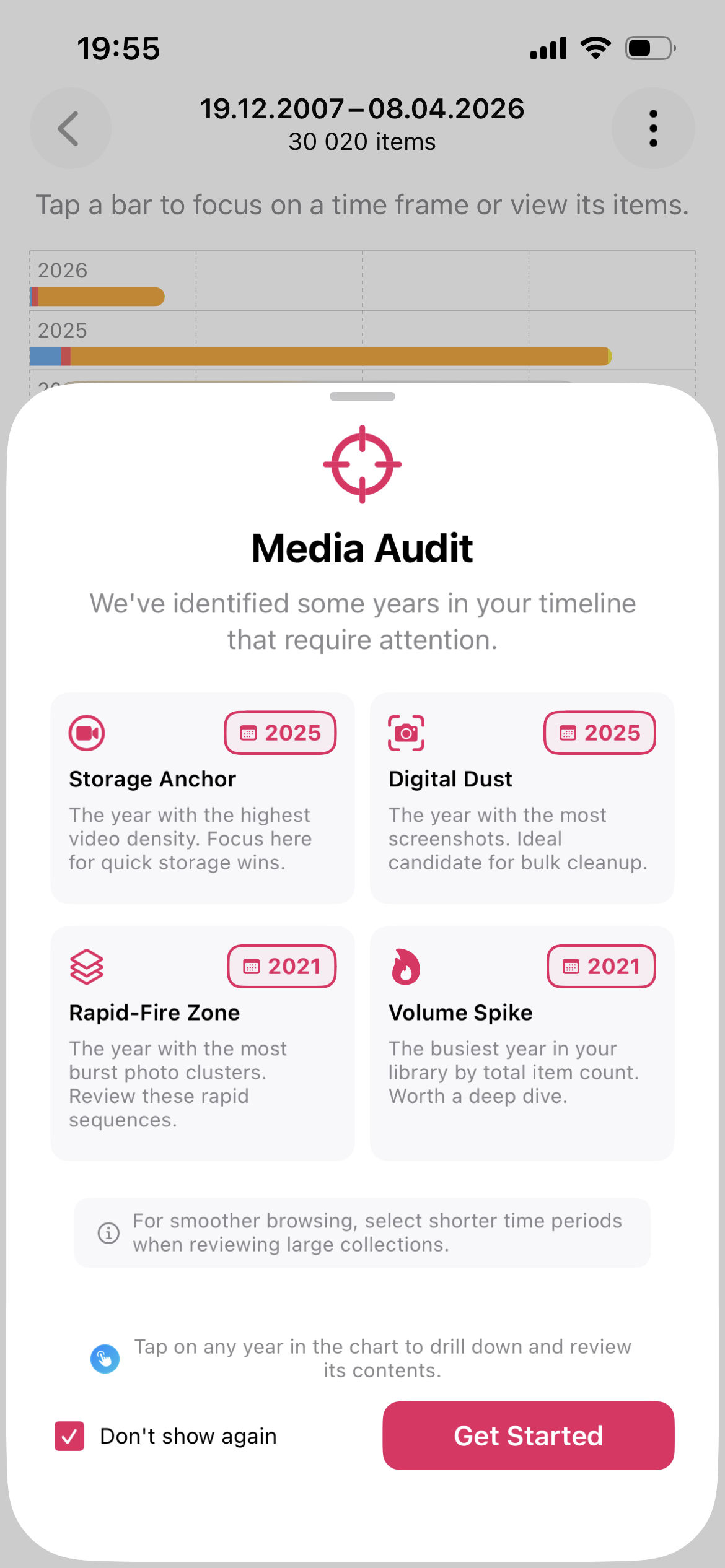
Instead of an opaque "Delete" button, Photosweepy offers Lenses:
- Space Ghosts Lens — identifies invisible video layers and hidden originals
- Storage Hogs Lens — isolates the 1% of files responsible for 50% of your storage bloat
- Smart Stacks — groups visually similar images so you see them side by side and keep the best shot
From Anxiety to Agency
The goal of a digital detox shouldn't be data destruction — it should be clarity. When you understand the architecture of your library, the anxiety of "Storage Full" disappears. You stop being a victim of your phone's settings and start being the intentional curator of your life.
Efficiency isn't about how fast a machine can delete. It's about how quickly a human can make a safe, informed choice.
Your memories are too important to be left to a blind algorithm. They deserve a tool that respects the difference between a duplicate and a story.
Run your first 1-minute gallery audit with Photosweepy today.