

A Parking Garage in the Rain
It's the digital equivalent of your car engine seizing in a six-lane intersection. It never happens when you're sitting on the couch.
It happened to me at 5:15 PM in a rain-slicked airport parking garage. Exhausted, hauling three bags, I wanted to snap a photo of the "Level 4, Row G" sign. I hit the shutter. Nothing. Apple's cold grey pop-up appeared like a digital bouncer.
"Storage Full."
I stood there blocking traffic, frantically scrolling through 14,000 photos like a caffeinated squirrel, trying to decide in three seconds if my best friend's wedding toast from 2019 was expendable enough to make room for a parking sign. I felt like a failure — not just a tech failure, but a human one. I was literally erasing my history to survive the present.
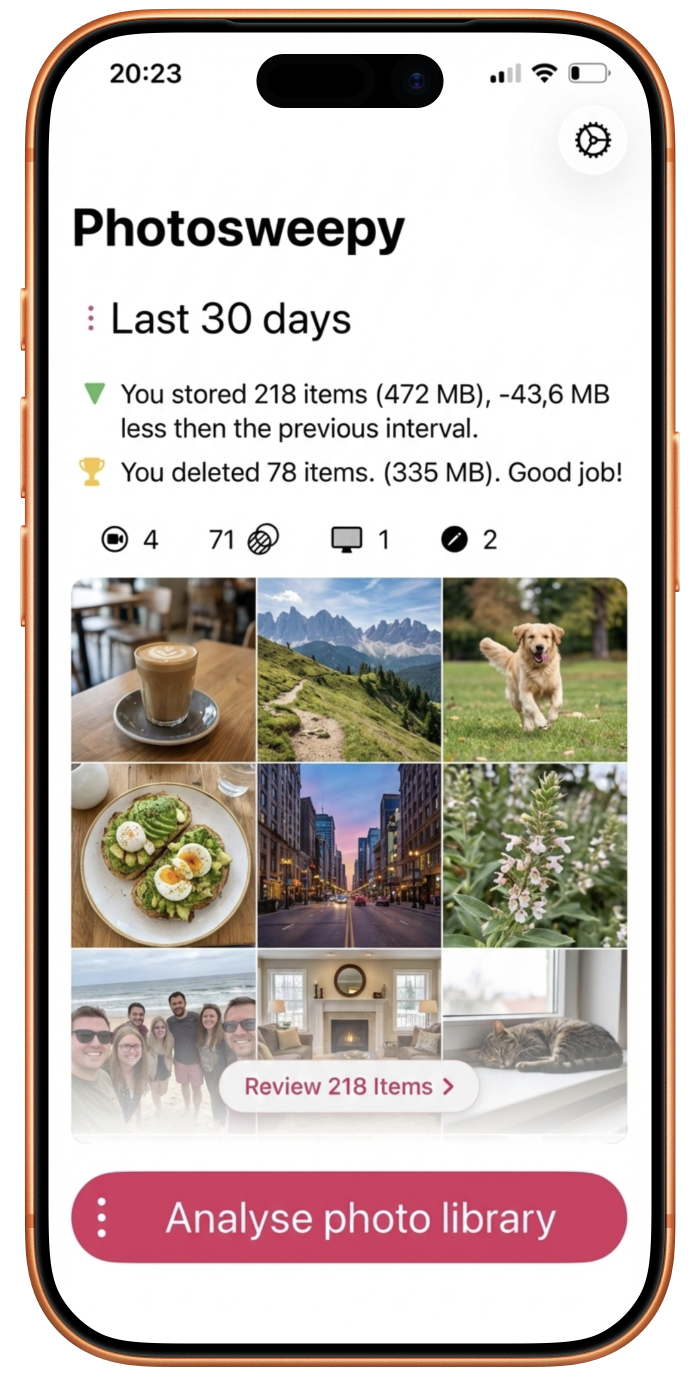
The Digital Landlords and the Space Ghosts
For years I lived as a tenant in my own phone. I paid the iCloud Tax — a few extra bucks a month — just to kick the can down the road. But buying more space doesn't solve the clutter. It just builds a bigger attic for your Space Ghosts.
Space Ghosts are the digital hauntings we all have:
- The "Just in Case" Screenshots — recipes you'll never cook, outfits you'll never buy
- The Accidental Bursts — 42 blurry photos of the inside of your pocket
- The Meme Graveyard — jokes that were funny in a group chat three years ago but are now just digital sludge
The standard solution is to download a "Cleaner App." But these apps are built by robots for robots. They treat your memories like data packets. They offer to "Auto-Clean" your life — which is terrifying. I didn't want an algorithm deciding that the one blurry, grainy photo of my late grandfather was "low quality" and should be purged. That's not cleaning. That's digital lobotomy.
The Kitchen Table Failure
I decided to fix it myself. My first attempt was a disaster. I built a high-speed tool that was all logic and no soul. I showed it to my wife, thinking I was a genius.
She used it for two minutes, looked at me, and said:
"This makes me feel like I'm doing taxes. I'm already stressed that my phone is full — why are you making the cleanup feel like a second job?"
She was right. I was solving a file problem, but we all have a memory problem.
The realization: we don't need a cleaner. We need a map. A way to see the forest of our lives from 30,000 feet so we can spot the clearings. We need to move from Hoarders to Curators.
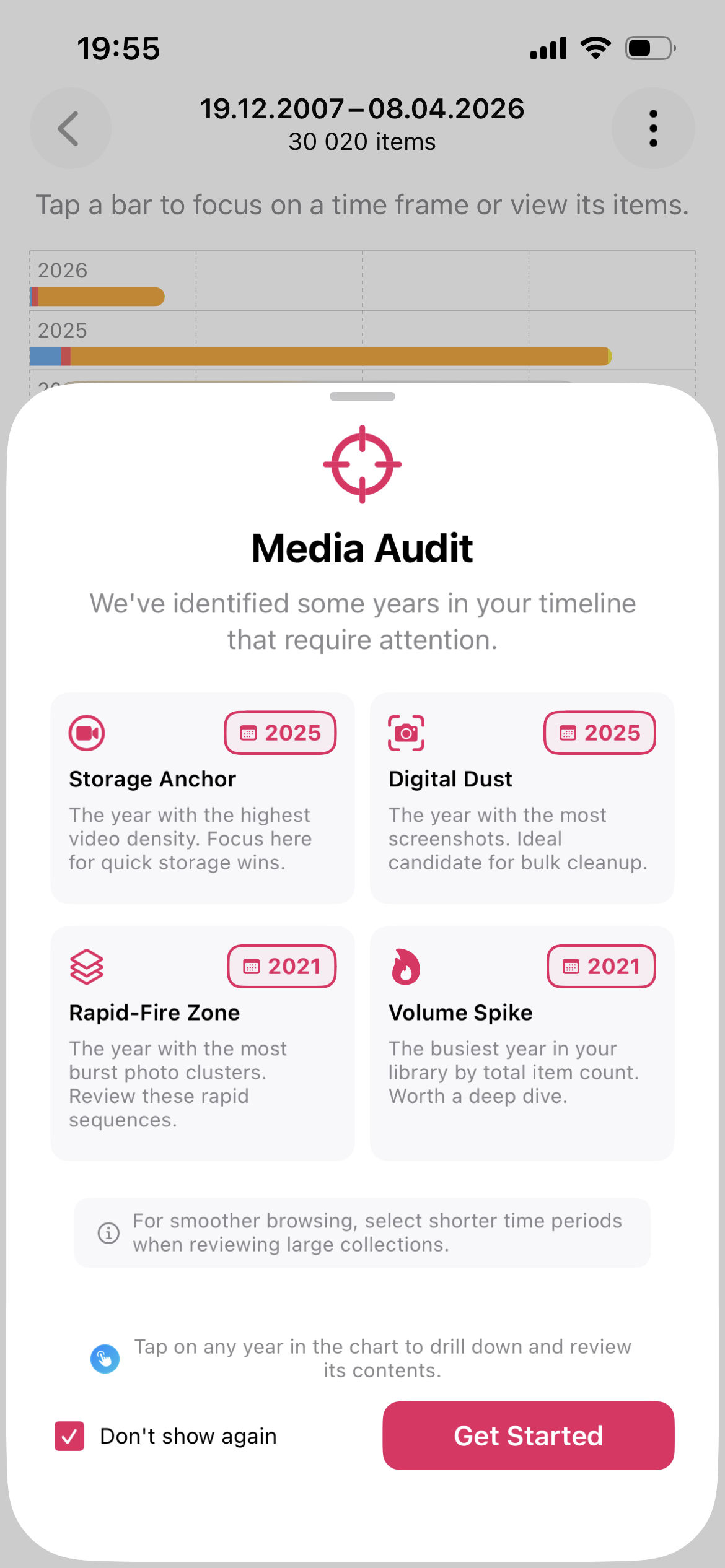
The Philosophy of the High-Level Overview
When I went back to the drawing board, I threw out the "Auto-Delete" buttons. The "Aha!" moment happens when you stop looking at individual photos and start looking at patterns.
I stopped building a vacuum and started building a Gallery Audit.
Three principles guided everything:
- No ransomware — no app that scans for free but charges $60 to actually hit Delete
- The 10,000-foot view — instead of showing two similar photos, show the entire 40-photo burst from that one brunch in 2021, so you can pick the winner and recover the rest in one tap
- Confidence over fear — you should know exactly why something is flagged, keeping you in the driver's seat of your own narrative
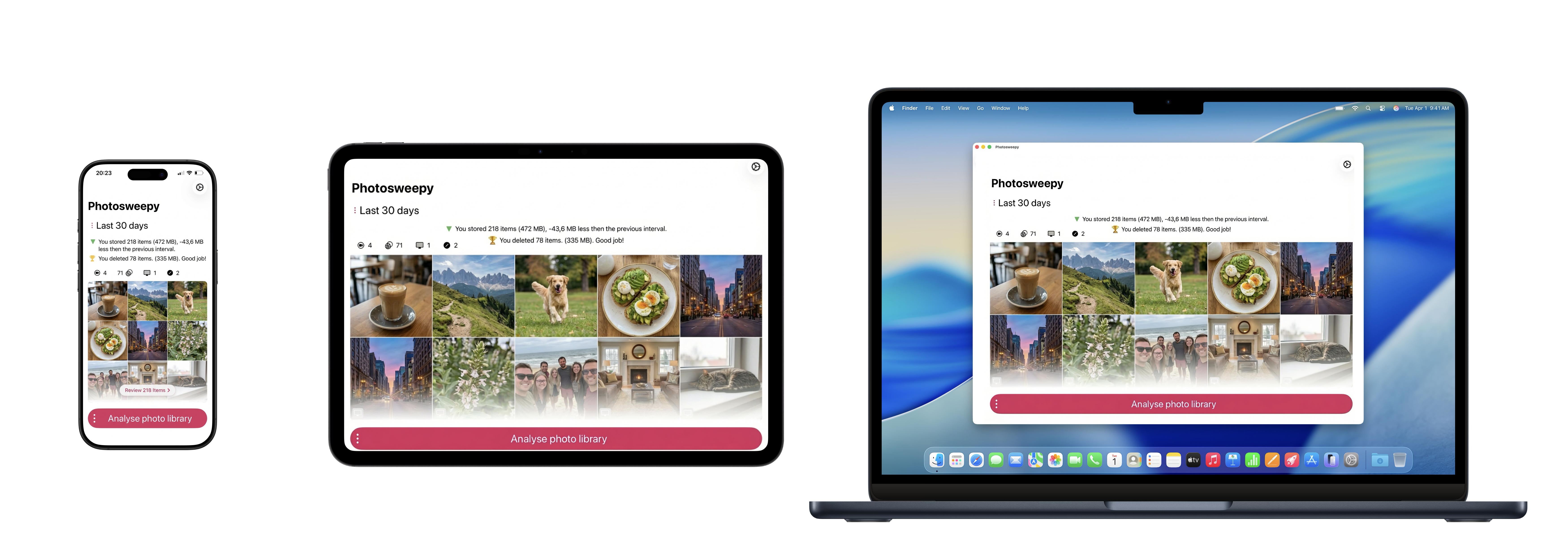
From Frustration to Curation
It took years of coding, a lot of coffee, and feedback from people who were just as tired of "Storage Full" as I was.
Photosweepy isn't just an app — it's a reclamation project. It's about taking back those gigabytes so you can stop being a digital janitor and start being a person who actually enjoys looking at their photos again.
You shouldn't have to pay a clutter tax to a trillion-dollar company just because you have 5,000 accidental screenshots. You deserve a phone that works for you, not a device that holds your memories hostage.
Want to see how this "parking lot crisis" became a real tool? Read the engineering story →